Showing posts with label Tech. Show all posts

Wednesday, September 30, 2026

Can we all just make up our mind!?-How people learned to accept controversial removals in newer devices(while some still refuse.... to an extent)

It was September 2016,


I was freshly graduated out of HIGH SCHOOL and beginning college..... before I abruptly dropped out embarrassingly.... then re-applied in late 2019 before starting again in 2020.


But before I started my studies in 2016, I saw news reports of the then newest iPhone that just launched into stores 

It was the iPhone 7.


This phone was to succeed the 6S series of Phones that APPLE had at the time

(I was still on my iPhone 5S at that time period.)


It was marketed to be more powerful than the 6S' of the time period as well as be more waterproof, have better cellular reception, larger cameras, all that jazz....


But it came at a huge cost:

The headphone JACK was removed, requiring the use of BLUETOOTH devices or the use of the included adapter to use your wire headphones.


While nowadays, people have learned to accept absence of the 3.5mm headphone jack in our phones..... begrudgingly,

Back in 2016, people were MIGHTY PISSED about the removal because they've been so used to plugging in their headphones when listening to music while also avoiding the latency issues with audio when using wireless headphones when playing mobile games.

The other issue at that time was that the iPhones did not support MAGSAFE charging so the only way you could charge your phone at the time was to use the lightning port in your phone.

The removal of the jack meant you could not use your headphones with your phone while charging at the same time.

Also, people stated that the use of wireless audio devices were still at their infancy while the audio reliability from lightning was still being questioned.


This really reminded people of an early mistake NINTENDO made with the GAMEBOY ADVANCE SP back in 2003 when they removed the headphone jack in favor of the charging port


While NINTENDO learned from their mistake and brought back the headphone jack in handhelds starting with the DS in 2004,


APPLE to this day still refuses to bring back the headphone jack in today's iPhones.

Again, while people have since moved on with their wireless earbuds, Bluetooth headphones, or their USB-C dongles,

I have a hunch that there's still a minority out there that still haven't got over the 2016 controversy. 


I was gonna end this here but ever since the PLAYSTATION Disc Discontinuation controversy announced back in CANADA DAY 2026,


I decided to touch on more about controversial removals on past devices that other companies have done and what their impact on them was.


First, lets start with IBM and their PS/2 line of Computers from 1987:

To this day, tech junkies keep LOUDLY insisting that the PS/2 was IBM's undoing that forced the company to sell their PC making business to LENOVO....

But that's not far from the truth.

While the PS/2 is indeed IBM's controversy worth talking about, the real downfall was IBM's refusal to move forward with innovations in favor of overpricing their computers so that only businesses can afford them.


The PS/2 however sold well.

But there was one overlooked issue that people don't talk about:

THE MOVE FROM 5.25" FLOPPIES to 3.5" FLOPPIES.


IBM saw that APPLE did that with the MACINTOSH series

So IBM did the same, thinking that they'd be innovating like APPLE did....

Needless to say, DOS users did not take a liking to the FLOPPY DRIVE switch because it broke compatibility with older software due to the Floppy Drive being different from what them seasoned users were used to.

Eventually as the years went on, DOS users accepted the use of 3.5" Floppy Disks due to the increasing complexities of the software before the days of CD-ROM.


Ok but what about the time APPLE removed the FLOPPY DRIVE in favor of CD-Drives with the 1998 iMac G3?

Again, we learned to live with the changes though that wasn't without controversy at first.

Most of the Controversy was levied not just on the removal of a FLOPPY DRIVE but also at replacing APPLE's tried-&-true ADB interface with USB.

While at least the KEYBOARD still kept the DAISY CHAINING ability with their keyboards, people bemoaned the fact that their ADB mice had nowhere to plug in without the use of adapters.


PC manufacturer eMachines did however get the last laugh when they tried to copy the iMac with their WINDOWS 98SE eOne PC in 1999.

But not just that but also to mock APPLE's removal of the floppy drive and complete move to USB by having a floppy drive on the eone


as well as retaining PS/2 ports on the machine


Quite the last laugh huh.....

Until APPLE sued eMachines for copying the iMac.


In the later years, We've all moved on to using USB for our Mice and Keyboard.

And we no longer use Floppy Disks in our systems even though it is proven that WINDOWS 11 still has FLOPPY DRIVE support going as far back as the 5.25" Floppies used in the IBM days.


Those migrations away from legacy ports, we've all learned to live with it....


Except for one factor which is the PS5

I'm guessing this is still ongoing, what with all the memes I'm seeing on FACEBOOK.


But for those who need a reminder, 

It was announced in CANADA DAY 2026 that SONY was planning a complete PHASE OUT of PHYSICAL MEDIA by JANUARY 2028 due to rising production costs as well as the fact that even though people still buy the DISC version of the consoles, SONY figured that People would rather buy their games digitally through the PLAYSTATION STORE.


Boy did they underestimate the heavy backlash but what made people so PISSED at the JULY 1st announcement was that it was a complete reversal of a campaign that SONY willingly used back in 2013.


Yes, I remember reading about the BACKLASH that MICROSOFT got when they unveiled the XBOX ONE back in MAY 21 2013 as I was in 9th grade in HIGH SCHOOL reading about it on both the SCHOOL's computers as well as reading it on WIKIPEDIA on my Wii-U.


The idea was that MICROSOFT wanted these CONSOLES to always be connected to the internet via your WI-FI or ETHERNET setup, that the included KINNECT 2.0 has to always be connected, and the games that were purchased would be tied to one's MICROSOFT ACCOUNT, sort of like a MACHINE I.D.

People hated the idea of always needing it to be connected online just to use the thing but others took offense to the fact that the KINNECT always being connected to the console would be a privacy concern....

But what got people PISSED OFF was that the MACHINE I.D thing would limit reselling of games because as we all know:

WE HATE DIGITAL RIGHTS MANAGEMENT

No seriously, DRM is CRASS to a gamer,

As if we already had to put up with the SECUROM, STARFORCE, and now DENUVO crap that permeates PC titles,

The last thing we needed was for a company to tell us we don't own games outright.


And 2013 era SONY took advantage of XBOX's fumbling's by holding a presentation that mocked XBOX's DRM policies by letting the press know that SONY will not be adopting a similar DRM approach.....

Eventually, MICROSOFT realized their mistake and on JUNE 19 2013, they announced that they will reverse their DRM approach as well as reverse their ALWAYS ONLINE approach... and they even decided to remove the requirement to have the KINNECT plugged in at all times despite it being bundled still.


Who would have guessed that 13 years later, its become a cruel irony to see what has happened at SONY when they announced their FIERCE COMMITMENT to NO FULL OWNERSHIPS for consumers just because of changing gamer purchase dynamics.


But despite things like a BLACKOUT, protests, etc.,

SONY refuses to backdown....

Part of the problem with the July 1st 2026 Announcement was that it completely strips COMPLETE OWNER SHIP of our games in favor of revocable license and that's something gamers are FIERCILY not going to support. PERIOD.


And in a similar case to how SONY used to mock XBOX for their DRM crap back in 2013, 

Companies like DOMINOES PIZZA and GOG have mocked SONY's actions in the recent days

(Though GOG's mocking approach seems to be more targeted at STEAM than SONY.)


And 4.5 months before the release of GTA VI on PS5 and XBOX SERIES X?

This does not bode well

SEE NO EVIL, SPEAK NO EVIL, HEAR NO EVIL....
Sums up everything we've been reading.

This has us all worrying about the current state of the gaming market, what with

EFFING SAM ALTMAN and his influence on PRIORITIZING A.I development for manufacturers instead of us consumers, which explains those STUPID high prices we now have to pay for our RAM, GPUS, and SSDs....


Excuse my RANTS an all but........

Someone needs to speak about the market conditions as it's left people like

JAYZTWOCENTS frothing,

that it's not even funny.


I'm at the cusp of FROTHING too so rather than RANT, 

I'm gonna go brew myself a cup of EARL GREY tea and DRINK.

Maybe that'll calm my nerves a bit.


And yes, 

I was inspired by a post from DAVID FARQUHAR's THE SILICON UNDERGROUND post about the IBM PS/2 regarding controversial removals on our devices, hence the mentioning of the IBM floppy disk debacle.

One of the rare chances that I borrow from THE SILICON UNDERGROUND when compared to being competitive on certain topics he hasn't covered yet. 

I'm still looking to see if he's covered topics like the ALAN KAY's laptop patent, BLISS photograph from 1996, MATTEL PATRIOT Computers, etc...

But so far, he hasn't with his own words.... yet....

I'll keep on looking.


Monday, January 12, 2026

The Best Photoshop Alternatives(2026 Edition)

RELAX.

Don't be fooled by the title.

I'm not making a switch to alternatives.

This is just an informative post for those who want to either switch, compliment, or get around device limitations on your adobe account.


And it's also because I want to recommend my choice of alternative software to Traditional Artist PETE EMSLIE of Disney Illustrator Canada & CARTOON CAVE fame since every APRIL, he does his annual Caricatures of the late actor JAMES GARNER during said actor's Birthday.

And I've read that since 2024, he can't use Photoshop anymore because his old MAC got too slow so had to get one of those newer APPLE SILICON MACS but he prefers to install PHOTOSHOP using his old CS install DVDs but ADOBE doesn't allow older versions to be used and refuses to sign up for a Creative Cloud Subscription.

So my post is mainly to help him find the perfect software before APRIL.


01: KRITA
This software is the favorite of people who still want to do digital art but they don't want to use photoshop due to Adobe's business practices or they still like Adobe but they need to get around device limitations.

I first heard about this piece of software back in my SPRING 2020 semester in College during the Social Distancing/Remote Schoolwork when a fellow student of mine named JOSH GREGORY says he uses this software on his gaming laptop to do his art while the other students were using Photoshop via through the School's pay system
(I chose to pay for my own Creative Cloud Plan.)

I tried KRITA at one point, just couldn't get the feel for it...

I think it's because the defaults for workspace layout and the fact that certain hotkeys weren't cutting it for me due to me using Photoshop for almost my entire digital Career.


Nonetheless, I eventually used KRITA but only to get around device limitations since KRITA is indeed PSD compatible.

An example of my use of KRITA was when I was contacted by the PAFN staff to create a poster to advertise a Garden outside the Community Centre and they needed some drawings of plants, vegetables, and tools to decorate the signage.
I designed most of the assets in PHOTOSHOP but then I had to work with my previous Laptop, MSI GP62M 7RDX LEOPARD and that meant having to use KRITA because at that point, I reached my device limitations on my ADOBE account.

So that's how that went.

I might use KRITA again in the future but only as a last resort, like say get around Device Limitations or if my MAVERICK FALCON needs repair or a MOTHERBOARD change.


02: PAINT.NET
Before I switched to Photoshop for my digital art needs,
I had to use this piece of Software for my artistic needs.

I was familiar with this software before back when I had my MDG HORIZON PC but I never released used it extensively until 2014 when I wanted something like PHOTOSHOP but I didn't want to pay for a CREATIVE SUITE License at the time and I didn't know of KRITA or GIMP so I installed PAINT.NET in my HP PAVILION Windows 8.1 laptop of the time period.

Don't be fooled by the name because it's totally unrelated to Microsoft's PAINT software that's always bundled with every version of Windows.

This software is Freeware as it was written by RICK BREWSTER when he studied Computer Science at WASHINGTON STATE UNIVERSITY in 2004.

The software may look simplistic but it's surprisingly powerful. You'd be amazed at how this software could do your art.


I haven't used paint.net in a long time since the switch to PHOTOSHOP.

I would highly recommend this software to anyone if only if it weren't for the fact that paint.net is written specifically for Windows STRICTLY.

So to MAC or Linux users, sorry......


03: GIMP

Another piece of Open Source Software like that of KRITA & PAINT.NET.
This software is often the go to for those looking for a photoshop alternative but still has the similar interface of PS.


Not much is known about this software as I've never used it in my life but I know people are going to have their own experiences so if it would be great, share your experiences with this app in the Comments so I can expand further this post and see how this compares to Krita or Paint.net.


04. PHOTOPEA

Believe it or not, this is not a piece of software but rather a website.
And it's interface is the closest to Photoshop in terms of usability and UI.


I first heard of PHOTOPEA back in 2021 when I was making textures for my 3D Material and Textures class in College during my late Sophomore Semester.

And since then, I've used it time after time since it's so close to PHOTOSHOP.

My only issue is that it's a website so a good internet connection is a must if you plan on using this as your daily driver.

And if you plan to trace over your line drawings, make sure you know your way through your computer's processing speed as well as be patient if the site wants to take it's time loading your assets.

Also, unless you subscribe to them, you might get distracted by the right side page ads that play but if you don't mind these issues

I would Highly recommend this software to anyone who's proficient in PHOTOSHOP, especially PETE EMSLIE since the interface is so similar to PS and it's also a website too so no Installations on your computer is needed.


I wish I've added other software but the aforementioned that I've listed are those I have personal experience with.


Update as of April 08 2026:
Pete Emslie did his annual JAMES GARNER post on Monday APRIL 06 2026 but this time, he left it BLACK & WHITE, not because he despises digital tools but rather because an old friend of his passed.

I'll put a Link to this post so you can read the details:

Happy Birthday Jim Garner, and Welcome To Paradise Cove, Rob!


Sunday, June 22, 2025

Happy 70th Anniversary LADY & THE TRAMP+How both a Cocker Spaniel and Schnauzer won the battle against convention in favor of Camera Lens innovation

On June 22 1955, Walt Disney released this animated classic to Cinemas worldwide.
This film is important not just for Disney but rather for the entirety of Animation as a whole.

As you can see above, the Film is in the Cinemascope Aspect Ratio, my preferred Widescreen Lenses.

Most 2D Animated films don't touch CINEMASCOPE Lenses for a multitude of Reasons:

As exemplified by the image above of the ICONIC Spaghetti Scene, the lenses are wide so that creates risks of not filling in that Negative space, especially when Screen Direction is important for the presentation.


And judging by the research I've read on the various Interwebs, Wikis, and DVD/Blu-Ray Featurettes, The animators and photographers admitted they weren't ready for Widescreen yet..... or ever would be, but they had no choice but to embrace the change of Camera Lenses and Filmstock.

One example that boggled our animators back in the mid-50s was the fact that because of a dramatic increase of the size of the canvas, various practices that the animators were used to using just don't apply to the new lenses.


For example, in the 4:3 original aspect ratio from Peter Pan and prior films, the backgrounds could move behind the characters.

One example of a moving background was the famous HEIGH-HO Number from Snow White.

But because of how sparse the setting is when moving to Cinemascope, the animators can no longer move the background as much as they used to without using a larger canvas for backgrounds.


So the animators had to learn to animate their characters as if they are the ones moving them around.


As well as the Camera operators having to follow the directions the animators impose on them through the exposure sheets.

This resulted in creating nice scenes such as this below


What was lost was the Animator's Preference of Close Ups.

I don't feel like using a closeup of The Coachman from PINOCCHIO so instead, 
I'm using this closeup of C. Bagley Beetle from MR. BUG GOES TO TOWN.

Back in the day, the closeups could be easily achieved and fill the entire 35MM lenses.

But not with Cinemascope.

If those closeups of the face did happen, then it makes it impossible to fill the entire screen due to the width of the lenses and the artwork.

No wonder Animation preferred the Anamorphic 1.85:1 Lenses when Widescreen finally caught on with the studios in the 60s.

 Though that did not stop animators from doing shots like this scene with Trusty sleeping.


So a new method of filling the screen happened which was to fill the Foreground with more Characters.


Such as this scene with Trusty meeting Lady and Tramp’s puppies.

It's a simple and dirty hack but it does work as it prevents the attention span from shifting away from the characters to the backgrounds.

Something that would later be a thing of a fierce camera battle once again with SLEEPING BEAUTY 4 years later in 1959.

Why did LADY & THE TRAMP switch to CINEMASCOPE?

Because according to sources, Disney wanted to represent sort of a DOG's View of what their environment looks like, without the Yellow/Blue Colorblindness of Dog Eyes in real life.


Until the advency of home video, Surround Sound on Lady and the Tramp was out of the question since unlike with SLEEPING BEAUTY, LADY wasn't planned to have stereophonic sound so I bet those who were alive in 1955 who saw this film in Cinemascope probably would have wished DISNEY gave this film a full FOUR-TRACK or SIX TRACK stereophonic Soundtrack because with just widescreen, monaural soundtracks would not make the film immersive enough.

Though Surround sound on a film that was originally released with a monaural soundtrack can still be a sore point for those who want restorations to be true to the original release.

As for the release of this film, I heard that to compensate for theaters that were not equipped or built for Cinemascope, or any form of widescreen,

The animators had to re-photograph the film using modified versions of their Exposure Sheets used for the film that's optimized for 4:3.

But unfortunately for VHS lovers, myself included back in 1999, we were stuck with Pan-and-Scan versions of the cinemascope print so for those who watched the film on VHS since the 1980s, we had to contend with the fact that it's actually the Cinemascope print that's using Pan-and-Scan which meant the camera faked movement.


Fortunately for those who watch on DVD, Blu-Ray, Ultra-HD Blu-Ray, and 4K Streaming, the film always uses it's original CINEMASCOPE Presentation to maintain all that widescreen goodness.


Though most Streaming Services for Windows, Mac, or Linux, are not optimized for ultrawide so If you plan to watch movies like this on your Ultra-Wide Monitor like my ASUS TUF Ultrawide, just burn the Blu-Ray into your SSD using VLC Player or MakeMKV, reformat it for Ultrawide, and there you go.

Or just look through the Catacombs of Archive.org for a 4K Print of the film that's already optimized for Ultrawide because watching Cinemascope movies on an Ultrawide monitor natively just looks good compared to watching on a TV or a Cinema Screen that's optimized for 16x9.

Or if you still want to watch it on your browser, download the Ultrawide Extension for CHROME.

Though watching on an Ultrawide monitor can't beat the superiority of watching on a Cinema Screen that's optimized for 21x9 that's for sure.

Monday, August 05, 2024

The Majesty of Cinemascope Aspect Ratio

Whenever I watch a movie, especially if it's in Widescreen,


I tend to prefer a certain aspect ratio for movies.


That aspect ratio is:


Sometimes referred to as 21:9, 2.35:1, or ULTRA WIDESCREEN, 

this widescreen format has been the go-to for many a movie released in cinemas since the format was introduced in the 1953 film THE ROBE.


Why was this format introduced at that exact date?


Well, lets travel back in time to 1925 with the unveiling of the very first tv:

This was one of the very first TVs made by John Logie Baird.

No, Philo Farnsworth wasn’t the inventor of television… rather, it was John Logie Baird who invented it.

Though Philo did invent what may be considered the modern tv(in CRT standards no doubt).

The tv example above is that of a Mechanical Television.

It used a rotating disk called the NIPKOW DISK to create the frames needed to generate pictures on that tiny little screen there.


If you thought the screen on Baird's televisors were small?

Just compare it to the size of the screens of these two computers below.


The IBM 5100 from 1975,


And the OSBORNE 1 (First Model) from 1981.


By the mid to late 1940s, NIPKOW DISKS fell out of favor and instead, 
Cathode Ray Tubes with their deflection coils, analog boards, Electron Guns, etc.
would become the standard for all things tv..... 

until much later when LCDs, Plasma, and OLEDS took over as display tech for Tv.

But what does TV have to do with Cinema?

Well, it's those early consumer televisions. That's what.

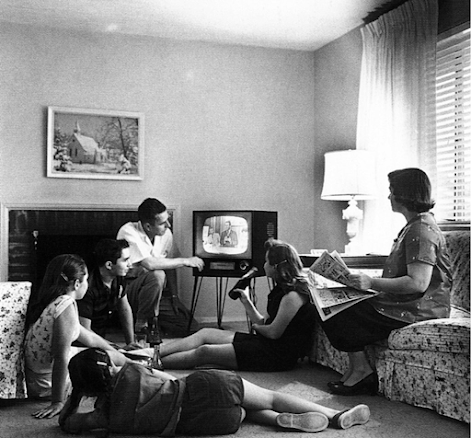
These Boxes were overtaking entertainment and movie theaters were not having it.

So what happened is that Hollywood took notice and started to emphasize things that you couldn't get financially on Consumer Televisions in the 1950s.

One was getting more color out of your film stock, 

another was emphasizing Surround Sound on Magnetic Prints

And most importantly, expanding the width of the film stock.

All three of these were unobtanium for the home back in the 50s because of the cost.
(Color TVs did start to appear in the 1950s but were insanely expensive back then.)

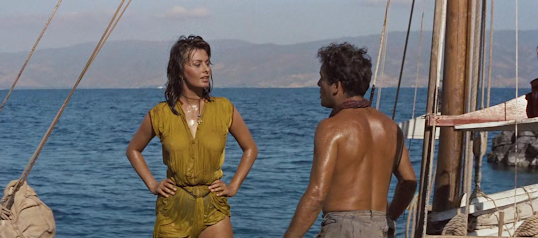
But this was the aspect ratio that you find on your favorite movies such as 
STAR WARS

Even though Color Television would eventually overtake cinemas again in the 1970s, TVs still were incapable of native Cinemascope.

If you've ever seen a 2.35:1 Aspect Ratio film on your older 4:3 Television regardless if it was CRT, LCD, or rear projection, this is the result


So you get full wide screen video but you have these black bars.

The other solution was to fill the screen but one method which is called PAN AND SCAN was a no go because of faking camera movement just to see the finer details that would have been cut if the video was unaffected.


Animation, at least in the old days, however has almost exclusively avoid using Ultra-Wide lenses in their movies because of having to recalibrate camera systems and create larger artwork to support the wider lenses which in turn can create more dead space.

LADY AND THE TRAMP, and SLEEPING BEAUTY, were prime examples of lovely films that took advantage of ULTRAWIDE in their original release, yet production was fraught with problems from the very beginning.

After that, Disney went back to 4:3 with 101 Dalmatians

before finally settling in on the more malleable anamorphic 1.85:1 Aspect Ratio starting with...
THE SWORD IN THE STONE.
However, I'm using an Open Matte Screenshot from the Wiki

And even then, those films were actually shot in 4:3 on their respective animation cameras.

The reason why your DVD, Blu-Ray, UltraHD Blu-Ray, and 4K streamed prints use the widescreen version instead of the 4:3 Original Negative is because the studios are using their preferred OPEN-MATTE print intended for Widescreen cinemas of the day.

It sort of replicates when these films had their widescreen Open-matte apertures set in their original theatrical releases.

But this sometimes causes headaches for purists who think that those movies should just use the original open-matte 4:3 negatives instead of replicating an aperture system of the 1960s.


Disney would only touch the 2.35:1 Lenses for live action films before trying their luck again with the lenses in Animation with THE BLACK CAULDRON in 1985
but when Cauldron bombed in the box office, the confidence in the lenses was shaken again.

The company tried again but this time using a digital variant of the lenses with
ATLANTIS: THE LOST EMPIRE in 2001..... 
we all know how that went....
(I plan to do a blogpost on Atlantis in the near future due to the film's vindicated popularity)


So far, whenever Disney uses the 2.35:1 Lenses for animation, it's relegated to Live-Action or CG Animated films.


But at least I can show you other examples of traditional 2D Animated films that use the 2.35:1 aspect ratio lenses.

Most of these examples are from other studios:

The Thief and the Cobbler (1992 Workprint)


The Iron Giant (1999), 


Anastasia (1997), 


Toei's Puss in Boots (1969),

The Simpsons Movie (2007)

And last but not least:

The Final 2 Evangelion Rebuild Films:

3.0 You Can (NOT) Redo

&

3.0+1.0 Thrice Upon A Tome

Though for now, I'll show a screenshot from THRICE UPON A TIME.

So why doesn't traditional animation use this style of lenses more often?

Because of issues of tracking where the characters need to be on screen as well as fill all that unnecessary dead space that needs to be filled to the brim on the screen.

And this is more noticeable when such films like that eventually get put on Home Video.

Before DVDs, Most VHS copies of animated films are cropped and have pan and scan so they can fit the image on those older 4:3 displays.

And even some Disney movies that were shot for widescreen instead use PAN & SCAN instead of Open Matte or Rephotographed.

LADY & THE TRAMP and SLEEPING BEAUTY are examples of films that were indeed rephotographed for smaller 4:3 Auditoriums in the 1950s but unfortunately for people who bought VHS & Betamax tapes of those movies, they were stuck with versions of those movies that were the widescreen print but were in PAN & SCAN format.


Your best bet for Widescreen back in the day was to buy a VHS copy that’s advertised as Widescreen or buy a Widescreen Laser Disc of said film.

CGI animation is the most common where you can find 2.35:1 lenses being used.... 
that is if the studio wants to use it that is.

Just like with 2D, 3DCG movie productions often choose to render the final frames using the 1.85:1 Aspect ratio instead of 2.35:1 due to the commodity of both how most modern multiplex screens are configured are as well as the commodity of today's Widescreen TVs

Regardless if the widescreen tv is a CRT, Rear-Projection, LCD, LED, Plasma, or OLED.

One of the very first 3DCG movies to use the wider 2.35:1 lenses in the final renders was Pixar’s A BUG'S LIFE released on November 1998.
But Pixar knew at the time that VHS was still king and DVD was still in it’s infancy to the point that for most home video releases, they just re-rendered the film on 4:3 since they still have the original digital files stored on their remote Linux servers.

Modern prints of A BUG’S LIFE that you watch on DVD, Blu-Ray, and 4K Streaming use the original 2.35:1 render because we all have widescreen displays.

I encourage you guys watch this Pixar Classic on your sleek Ultra-wide Gaming monitors just to realize the majesty of the virtual camera lenses used to render this film.


One Reason I prefer the 2.35:1 Aspect ratio is due to how properly cinematic the lenses are.

I understand this lens is mostly for movies so If I work on Television animation, I will have no choice but to use 1.85:1 for the final renders but when it comes to personal projects, you know what's my favorite lens to use.

And here are some of my art that uses this lens type.


Man, it's been a while since I've done these art pieces.


Yes, I know this post is filler but my other posts are pending, plus I had work when I originally made this post, and I want to avoid Maverick Quickies for a while so I had to do what I had to do.

As always, See you next Blogpost.