The date was April 16 1988.
A Double-Feature Screening took place in many Japanese Cinemas at that time.
That was for
MY NEIGHBOR TOTORO
and
GRAVE OF THE FIREFLIES.

But this blogpost is dedicated to this one film which despite having two English Dubs, I actually have chosen to watch this gem exclusively in Japanese with English Subtitles due to the fact that Setsuko's voice actress was very young at the time as well as the setting of the film.
Plus, it's made by the late ISAO TAKAHATA.

It's also a perfect allegory on why I get mad when I browse on my Custom Built PC or my iPhone,

And I see people on Social Media always complaining, even in their adulthood, that they get still traumatized by dramatic plot points in their favorite animated films like....
the death of Littlefoot's Mother after her fierce battle in a violent Earthquake protecting her son from SHARPTOOTH in
THE LAND BEFORE TIME(1988)

or the death of Mufasa following the aftermath of the Stampede in
THE LION KING(1994)

I feel that the North American Animation Industry has been infantilized to the point that Executives, now influenced by the whining of children turned adults in this decade, will demand that these films have a happy ending just to appease the moral guardians or sensitive children with little to no regard of writer's or other fan's protests.
This is a part of a problematic thing in Executive Decision Making called:
FOCUS GROUP CHANGE.
It's where content is changed just because of audience sensitivities.
Like most filmmakers, I hate it when the FOCUS GROUP CHANGE happens with a lot of films.
It takes away the more poignant of plots or endings of a film...
Especially when used in adaptations of novels or fairy tales.
Or Historical Events.
This problem was beautifully parodied in a 1994 THE CRITIC episode where titular film critic JAY PRESCOTT SHERMAN is forced to preview a *NON-EXISTENT* remake of THE PRIDE OF THE YANKEES where in that remake, LOU GEHRIG is cured from ALS and survives.
He explained that the remake did that because the GODDAMN EXECUTIVES felt that the original 1942 ending, as well as the real-life events, were too sad for today's sensitive audiences.
This triggers a rant from him that REAL-LIFE is not about happy endings.....
And then he gets cut off by a WE'LL BE RIGHT BACK card.
Now a Real Life example that Happened IN STUDIO:
Did you know there were a lot of fights between the Disney Animators and ART STEVENS? It's all true. Chief the dog was supposed to be killed off just like he was in the novel but was animated almost at the last minute to show he's still alive but injured.
Now lets get back into GHIBLI Topic.
GRAVE OF THE FIREFLIES DOES NOT HAVE A GODDAMN HAPPY ENDING!!!!
PEROID!!!
We all knew that since watching the very first scene from the film and the first line of dialogue.
(From the subtitled version that is....)

..... Ok.
Maybe Isao Takahata should have watched where his writers were doing because that was a blatant and unintentional spoiler.....
Or maybe a Ghost's flashback was really the whole point of that line.
Now, I want to tell you about a topic we call PATHOS.
Yes, I used ALL CAPITALS for the word Pathos because it's an important topic for this blogpost.
PATHOS,
An Ancient Greek term for Emotional Suffering or experience but not in a PTSD way.
It's more of a rhetoric on quality of making people feel pity or sympathy.

PATHOS is everywhere in Cinema but the one thing it hardly ever gets used on is ANIMATION.
Sort of....
It does get used in animation but not all the time due to things like expectations from audiences for animation to be happy-go-lucky or just plain funny.
It takes balls for animation to actually use pathos so it's no wonder DISNEY always takes that cake with their ways to kill off or fake a character's death with a deep sleep, injury, etc.
It's also tells us why Live-Action DRAMA films actually do better and win the most awards compared to COMEDIES or ANIMATION.
So for example,
Let's say you watch a shmaltzy, cute, saccharine, funny film such as
Don Bluth's ROCK-A-DOODLE.

It's got it's share of animals singing and dancing.
But that film did very poorly, Got itself negative reviews from Critics in it's original 1991 release.
And who won the best awards and positive Critical reception in 1991?
If you guessed BEAUTY AND THE BEAST, that was a good guess as that film was nominated for an Academy Award in 1992.

But Disney's 1991 triumph ultimately lost to THE SILENCE OF THE LAMBS during the 64th Academy Awards.
And SILENCE OF THE LAMBS is a Live-Action Drama.

But it does illustrate that problem that Critics and Reviewers are going to have when they review films.

Ultimately, the one Genre Critics are going to choose for appraisal is DRAMAS because the more emotional trauma the film inflicts on our audience, the more likely the film is going to win those awards.
I also understand it pisses of people who mostly watch comedies just for the laughs when they find out that CRITICS lambast the Comedies and always are more favorable of dramas..
but I get where this is coming because nowadays, Today's Comedies have degenerated into pukefests on whether you can achieve the most dirtiest of jokes or how many times the word FUCK can be said on-screen just to earn that coveted R-Rating.
Sure, the F-Word is also used in DRAMAS too, but the way it's often handled is through emotional tension, not for poor-in-taste-jokes that would make Teenagers laugh till they wet their pants.
Such as in SILENCE OF THE LAMBS were an officer asks where the F is his ambulance.
Or in THE SHAWSHANK REDEMPTION where inmate TOMMY WILLIAMS flips out over the perceived difficulty of his General Educational Development exam.
Did I say DRAMAS winning awards piss off the Comedy-Loving Viewers?
I forgot to mention that it also pisses off.... or more like makes filmmakers who specializes in Comedies feel somewhat envious.
Let's use the 1993 REN & STIMPY episode SON OF STIMPY as an example.

According to John Kricfalusi, he hated the fact that dramas were always considered for award nominations and marvelous reviews from critics over comedies which he excels at and prefers.
He also hated how studios like Disney have manipulated the Film Criticism Industry into choosing emotional trauma over laughs just so movies can be nominated for said awards.
Maybe that's the reason why Disney's Competitors try but always fail to unseat the MOUSE HOUSE for all the awards and acclaim.
They try too hard but the effort becomes all for naught.

So John took it as a challenge to fight that by making the most ridiculous premise that he could think of that could still make people cry and win critical acclaim.
All with the most minimal amount of editing, and instead, focus on the acting... sort of....
THE PLOTLINE:
STIMPY NOT FARTING FOR A SECOND TIME.


To quote from his BLOG:
"I purposely made a cartoon that used some filmic tricks to make people cry just to prove it's not difficult to do it.
And I didn't have shoot anyone's mom either.
I made people cry over the fact that Stimpy couldn't fart for a second time.
I went out of my way to make the story have the most preposterous plot events in it-everything to undermine the seriousness of Stimpy's depression.
Besides the mood tricks, I relied heavily on Stimpy and Ren's acting-the drawings of their expressions and their interactions.
A lot of films will ignore this part of the pathos recipe.
They rely on the filmic tricks and contrived story points."
.........
Ok. Just like most people, I'm slightly going to disagree with this one for a bit.
Making people cry over the fact that Stimpy couldn't fart for a second time?
Now that's just absurd.
But what it did succeed at was making people sympathetic towards Stimpy during his depression period.

And as far as I can see it, John K still used filmic tricks such as Camera Cuts just to prove his point on that matter... the exact filmic tricks he was lambasting.
All just to prove that it's not so hard to make people cry over the most ridiculous premise even if it's played mostly for drama.
Plus, the episode was made as an exchange he made with Nickelodeon Executive Vanessa Coffey that if he made a heartwarming story for her, he can make gross and funny stories for the audience such as THE CAT THAT LAID THE GOLDEN HAIRBALL & FAKE DAD.
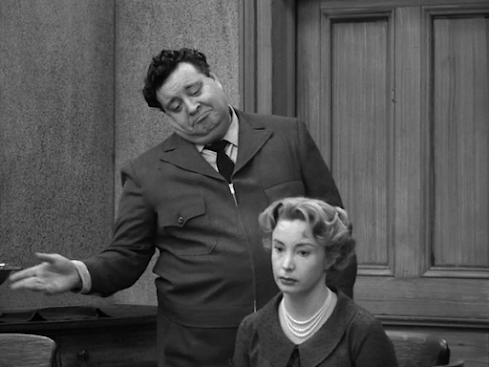
Also, in that same Blogpost on JOHN K. Stuff, he compared his own SON OF STIMPY episode to an old episode of THE HONEYMOONERS.
Specifically PARDON MY GLOVE from 1956.
Here, Ralph Kramden's actions pissed off his wife Alice, who was about to surprise her husband with a birthday gift.
Alice was also pissed off on how Ralph ruined her plans to redecorate the Apartment in time for his birthday party.
As you can see below, Ralph realizes through his Manly Remorse on what he's done to Alice so he tries to make up for his past actions and apologize.


Here's the Dailymotion link if you want to see for yourself:
https://www.dailymotion.com/video/x1pk7w_ralph-has-remorse
So John's free to say shit about whether Disney or their competitors want to or not to use emotional scenes such as Mufasa's death in the aftermath of the wildebeest stampede,
or more importantly,
when the Dwarves think Snow White is dead,

but in reality, SPOILER ALERT:
She's in a deep sleep that can only be broken by True Love's Kiss.

Like I said, my obsession with PROPER PATHOS in animation is due to my frustration with people on social media saying PATHOS SCENES like these traumatized them during childhood.
But recently since the September 9 2024 passing of James Earl Jones,
actor of Darth Vader and Mufasa,
I'm seeing memes where people are fantasizing about changing the scene to someone on a car rescuing characters like MUFASA from death....
That's what made me so mad about that "NO KILLING CHARACTERS" mentality, it undermines what the writers were doing back when they made these stories.
It's almost like they're demanding that ANIMATION should be happy-go-lucky....
I'm sorry to say this but Animation doesn't work that way.
And Grave of the Fireflies proves my point by showing two children fighting to survive the atrocities of the KOBE Firebombing in 1945, during the tail-end of WWII...

we all know it's not going to end well for them.....
GO AND WATCH THIS GHIBLI GEM ON NETFLIX,
BECAUSE I DON'T WANT TO SPOIL THE PLOT FOR YOU ALL.
(And I highly recommend setting this film's language to JAPANESE with English Subtitles just to get that authentic feel to the setting and the story.)
Regardless of the filmic tricks such as jump cuts, melancholic music, or whatever was used during the parts that made us cry such as all the emotional stuff shown on screen,
GRAVE OF THE FIREFLIES succeeded on the most important thing that every animated film desperately needs: TRAUMATIC PATHOS.

I don't believe in escapism.
The reason is, once you put yourself back in reality, you find that whatever happened such as what's going on in Europe or the Middle East is still happening with no end in sight to the conflicts.
To quote LIGHT YAGAMI from DEATH NOTE:
"The World is Rotten."
This whole obsession with Drama Films makes me realize, in an age where you can't tell a joke without pissing off the Politically Correct Obsessed,
maybe COMEDY is not in my blood.
I feel that in order to really make it into the film industry, I should instead focus on DRAMAS as my strong suit because that tends to have an easier time to tell a proper story than a pure comedy due to focus on storytelling than it is to make someone burst into laughter.
And it seems ISAO TAKAHATA, regardless of what subject matter he directs or writes, may have been the perfect man for anything DRAMA related.
Compared to his Contemporary HAYAO MIYAZAKI who specializes in escapist comedy films for Children, with the exception of PRINCESS MONONOKE in 1997 which was marketed for older audiences,
ISAO TAKAHATA mostly specialized on Dramas.
Grave of the Fireflies, Only Yesterday, and PRINCESS KAGUYA are all Dramas...... with POM POKO and MY NEIGHBOR THE YAMADAS being one of his only comedies he directed.
Now that's Academy Respect for you.
And it makes me respect TAKAHATA even more years after his passing.
Well.... I did deviate a little from the film but this wasn't a retrospective.
Mainly, I just wanted to use this film as an allegory for my frustrations on what I see on Social Media when it comes to mine and other filmmakers obsession with PATHOS.
I mean, seriously, us filmmakers have the right to make our dramas or thrillers.
For the love of SAKUMA DROPS,
Please stop bitching about all the trauma that the writers and animators put in critically acclaimed films.
If the writers and animators have to kill off an important character in order to move the story forward,
LET THEM!!!
We're just doing our job so please, let us!!!
.......
On a sidenote, while I did have to watch the film on NETFLIX,
*In Japanese with VSI's Subtitles because of my love of Setsuko's prerecorded dialogue*
I instead chose to use high quality photos of the film from IMDB because unlike my later RANMA review where I did resort to iPhone photos in front of my TV, I want visual consistency with this blogpost.